
"I wish to share my knowledge and experiences with professors, teachers, specialists, and healthcare practitioners. This website along with the research and teachings are my gifts to those who seek to improve their profession and the services they offer to their patients."
This website has enough information to get you started. It also explains one reason why stretches, acupuncture, trigger point therapy, instrument assisted techniques, traction, and exercises all work. You have to realize the boundaries of your scope of practice and stay within them. New references are constantly being added.
About Dr. David De Camillis
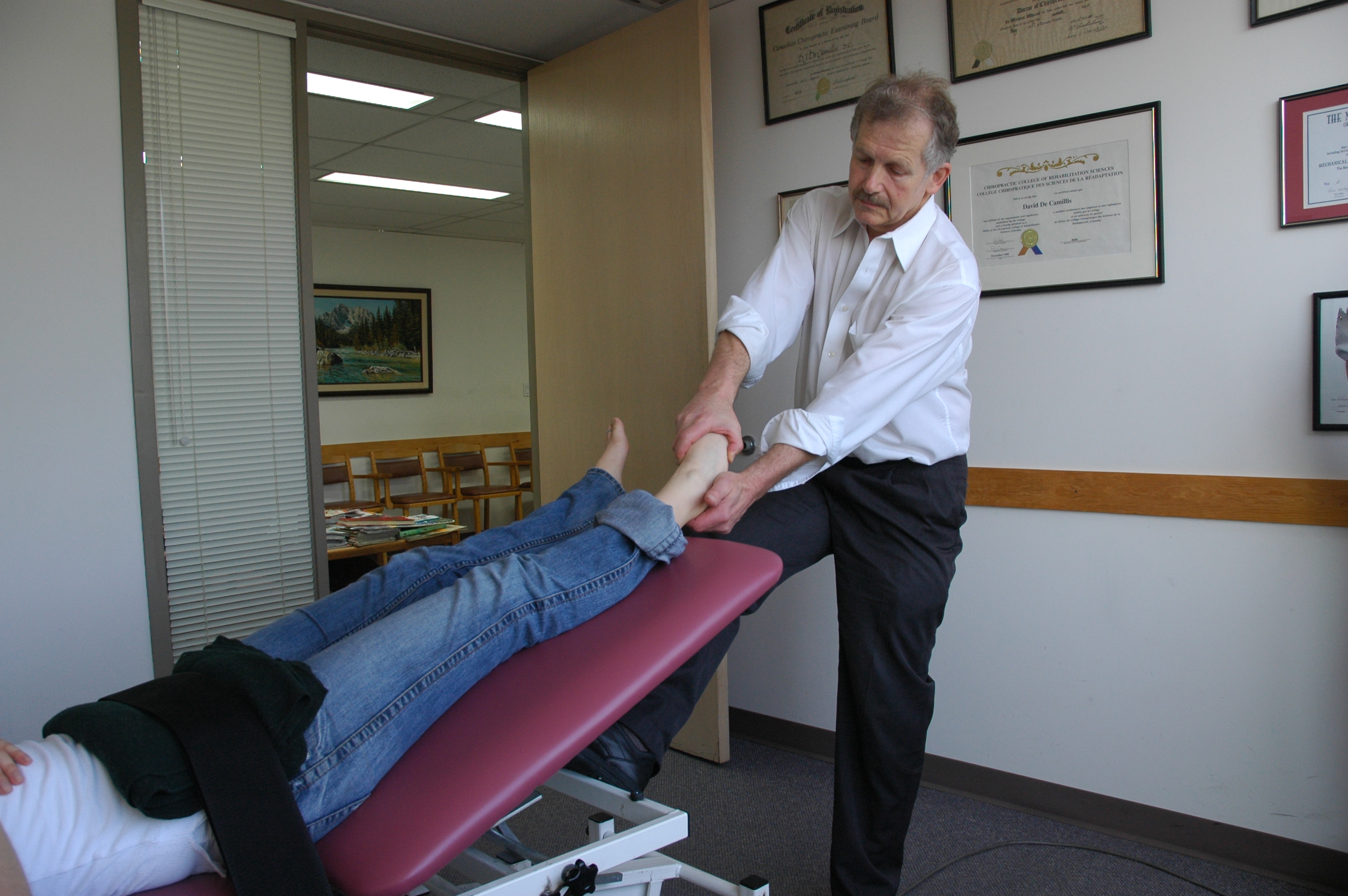
David De Camillis has been practicing since graduating from the Canadian Memorial Chiropractic College (CMCC) in 1977. By 1999, he had attained a fellowship in rehabilitation and a diploma in McKenzie Mechanical Diagnosis and Therapy (MDT). In 1999, he made a discovery and has since been teaching and conducting research.
His seminars have been approved and endorsed for continuing credits by various professional bodies such as the Registered Massage Therapists of British Columbia (RMTBC), the Canadian Sports Massage Therapy Association (CSMTA), the College of Chiropractors of BC (CCBC), Central College (Vancouver location), and the British Columbia Association of Kinesiologists (BCAK). He has taught internationally in Korea, Hong Kong, and Thailand.
The Discovery
His initial discovery in 1999 has resulted in a logical explanation why many musculoskeletal disorders exist. It mainly concerned the lack of blood flow and oxygen supply to the affected parts of the body. A second discovery several years later explained why posture distortions such as forward head presentations exist. Just recently he realized a more all encompassing explanation: thermodynamics. Because of these realizations, proven mechanisms of action for assessing and treating many conditions have emerged. He presents common pathophysiologies and their effects. He also presents assessment tools and treatment methods. The clinical reasoning is elegant and simple. These ideas are so fundamental they can be incorporated into what you are doing now. Every practitioner is unique in their methods like different ships in the harbour. This theory is like a compass that can be use by all.
What I Can Do For You Now
Preceptorship:
Audience: Healthcare Professionals
Topic: One-on-one hands-on teaching customized to meet your needs [Continuing Education Credits are available]
Time: Ongoing
Location: Central College (Suite 200 - 60 Eighth St, New Westminster, BC V3M 3P1)
Webinars and Seminars:
See the Upcoming Seminars for more details.